
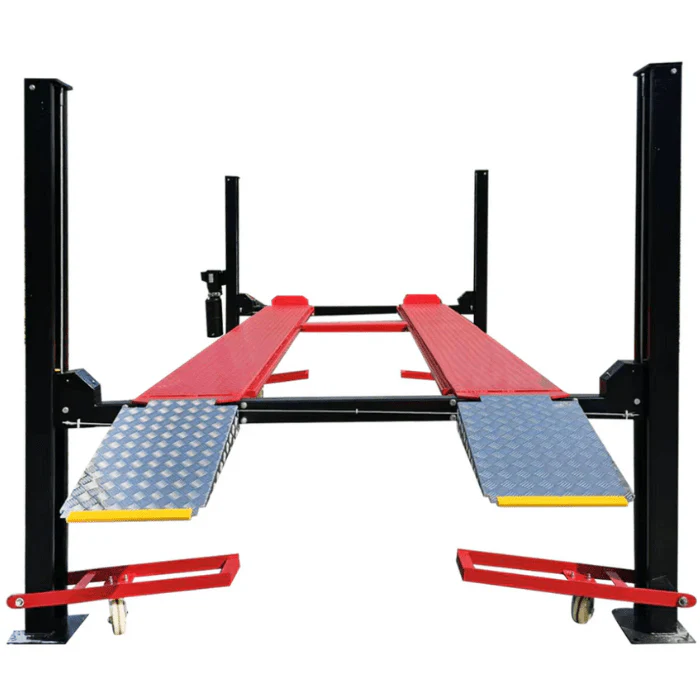
One of my lifelong goals: Have a shop with an automotive lift
Part 1-choosing, purchase and delivery
For the past few years, I had been researching car lifts. Not that I had any place to put the lift at the time. But I’d always read up on the types, usability, and quality. I just figured that if I ever did get a shop, I’d be ready to know what kind of equipment to buy. After years of due diligence, I finally now had a shop and was ready to spend some money. Well almost ready.
The first decision was the type off lift. Basically there are two consumer types: 2-post and 4-post. 2-post lifts have a post on either side of the car with arms that swing under the car. They are the most versatile allowing access to all parts of the car. It’s the type you see in most repair shops. However, it’s also the type that you see in YouTube videos, trying to lift an unbalanced car. Most end with the person running away and the car crashing to the floor.
The second type is a 4-post. There are posts on all four corners with ‘runways’ for the car to set on. This type is seemingly more stable and better for older cars. It also serves as a parking option. You can lift one car high enough to drive another car underneath for vertical storage.
With the help of castors, you can actually move the 4-post around the shop-although I can’t imagine how I would ever use that.
The one drawback is that when you lift the car, it’s still sitting on it’s wheels. That’s not helpful if you want to change a tire or check the brakes. So to solve that problem, the lift uses a ‘jack tray’. It’s made of heavy steel and spans between the two runways. You simply use a bottle or scissor jack to lift the car slightly off the lift. Problem solved.
Finally, I looked at quality. And along with that came price. Some lifts were almost twice as much as others. I had a price-point in mind. Other factors were warranty, parts, and delivery.
The expensive units seemed to be of better quality but had specifications and features that I didn’t think I needed. The higher priced units raised and lowered the lift faster, and could cycle the lifting more. If I was planning on raising and lowering a car 6-8 times per day, then the more expensive would be a good choice. I was not planning to use it on a continuous basis-just every once and while.
I put all the information I was collecting in a spread sheet. Size, dimensions, and price. Then came the time I was actually ready to make the decision. I started in searching and shopping in earnest. Then my news aggregator started catching on and I was flooded with lift advertising. And the more I clicked, the more the ads appeared.
eventually, I found a website that responded to my questions with the lift reasonable priced. I made the purchase and arranged to pickup the packaged lift at a warehouse near chicago.
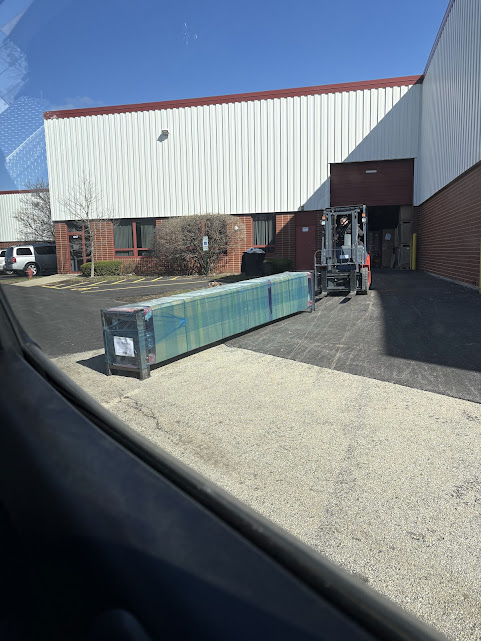
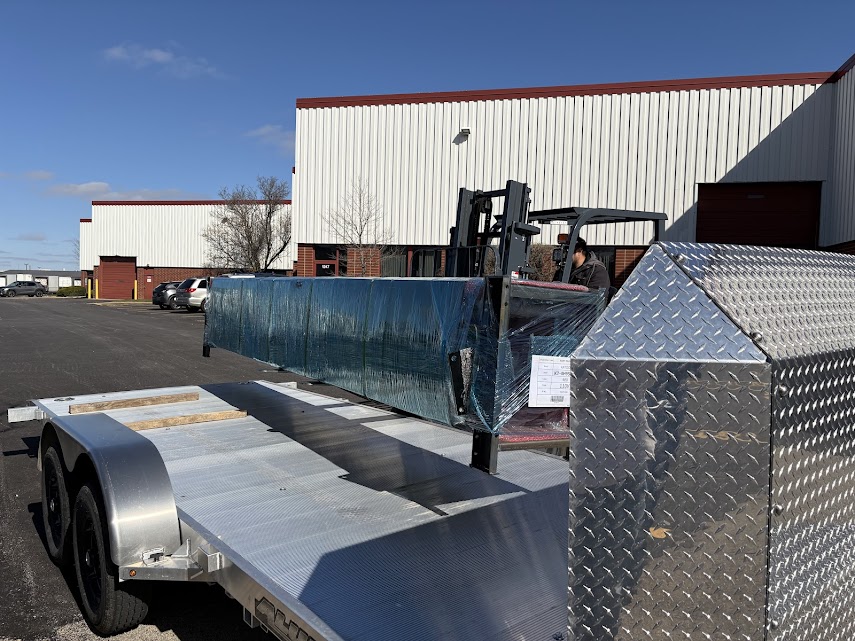
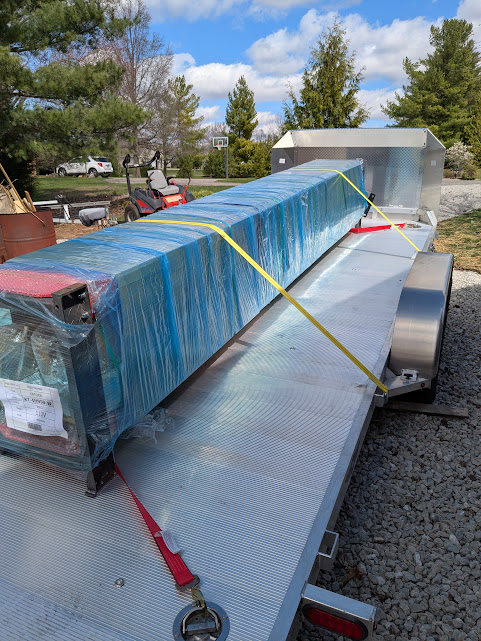
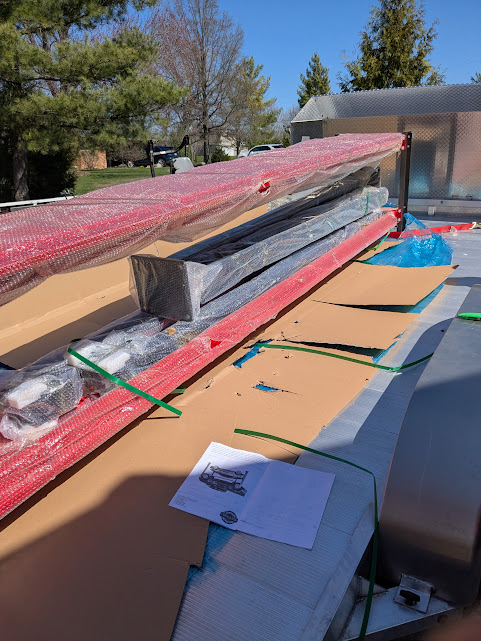
The whole package weighed over 2000 lbs. Since I didn’t have equipment that could lift that much, I unpacked it right from the trailer. Most of the legs and other equipment I could lift off. The 14′ ramps weighed 600 lbs. each so I had to figure out another way to move those.
Next post: Assembly